Overview
Howrah is a significant district in the southern part of West Bengal, India, located on the banks of the Hooghly River. It is one of the most important districts in the Kolkata Metropolitan Area. Howrah is well-known for its industrial significance, especially in rail transport due to the famous Howrah Junction, one of India’s busiest railway stations. The district is also home to some of the most iconic historical sites, cultural landmarks, and industrial centers in the region. With its rich history, prominent infrastructure, and urban-rural balance, Howrah serves as a major economic hub and a gateway to Kolkata.
Table of Contents
History
Historical Significations
Howrah has a long and diverse history dating back to the Mughal period. The region was once part of Sundarbans and was slowly developed under British rule. Howrah was historically an important trading and industrial hub due to its strategic location along the Hooghly River, which provided easy access for ships and boats.
The Howrah Bridge, one of the most iconic landmarks in Kolkata and a symbol of Bengal’s industrial revolution, was completed in 1943. The district also has a colonial influence, with several churches, bridges, and other buildings that were constructed during British rule. After independence in 1947, Howrah continued to grow, both industrially and culturally, with significant progress in sectors like engineering, iron works, and railways.
Famous For
- Howrah Bridge: The iconic suspension bridge connecting Howrah to Kolkata, a symbol of the city.
- Howrah Junction: One of the busiest railway stations in India, serving as a central railway hub.
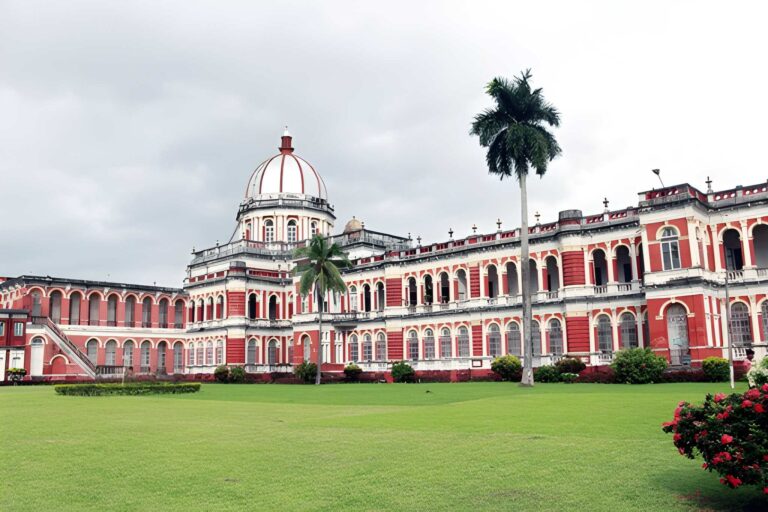
- Marble Palace: A grand mansion in the Bengali Renaissance style, with rich architecture and a private museum.
- Maidan: The large open green space in Kolkata, which lies adjacent to Howrah and is ideal for recreational activities.
- Indian Botanical Garden: Located on the banks of the Hooghly River, it is famous for its diverse plant species and the Great Banyan Tree.
Geography & Politics
Geography
- District HQ: Howrah
- Area: The district covers an area of 1,467 square kilometers.
- Population: The population of Howrah is approximately 5.4 million (verify with latest census data).
- Literacy Rate: Howrah has a literacy rate of about 80%.
- Major Cities: Howrah, Salkia, Shibpur, Uluberia, and Dhulagarh.
- GDP: The district’s economy is centered around industries, railways, and agriculture. Howrah is an industrial powerhouse, housing numerous factories, particularly in sectors like engineering, jute mills, and iron production.
Political
- Lok Sabha Constituencies: Howrah is part of the Howrah Lok Sabha constituency.
- Vidhan Sabha: The district has 6 Vidhan Sabha (Legislative Assembly) constituencies, including Howrah Uttar, Howrah Dakshin, and Uluberia.
- Subdivisions: Howrah is divided into 3 subdivisions:
- Howrah Sadar
- Uluberia
- Shibpur
- Blocks: The district consists of 12 administrative blocks.
Tourism
Places to Visit
- Howrah Bridge
- One of Kolkata’s most iconic landmarks, Howrah Bridge connects Howrah to Kolkata over the Hooghly River. It is an engineering marvel and an integral part of Kolkata’s skyline, often featured in Indian cinema.
- Howrah Junction
- A historic railway station, Howrah Junction is the oldest railway station in Kolkata and one of the busiest in India. The station is an essential part of the Indian railway network and an architectural landmark.
- Indian Botanical Garden
- Located in Shibpur, the Indian Botanical Garden is famous for its large collection of plant species, including the famous Great Banyan Tree, which is one of the largest trees in the world by canopy spread.
- Marble Palace
- The Marble Palace is a stunning 19th-century mansion in North Howrah, known for its neoclassical architecture and impressive collection of art and sculptures.
- Maidan (Kolkata)
- The Maidan is a large park that stretches across the city of Kolkata, lying adjacent to Howrah. It is perfect for a relaxed day out with sports fields, historical statues, and a scenic view of the Hooghly River.
Historical Places & Monuments
- Howrah Bridge: An iconic symbol of the city and an engineering wonder that has been operational since 1943.
- Marble Palace: A historic mansion with unique architectural styles and historical significance.
- Bengal Engineering and Science University: Known as Shibpur, this university is one of the oldest engineering institutions in India, built during the British era.
Traditions and Culture
Art, Culture & Festivals
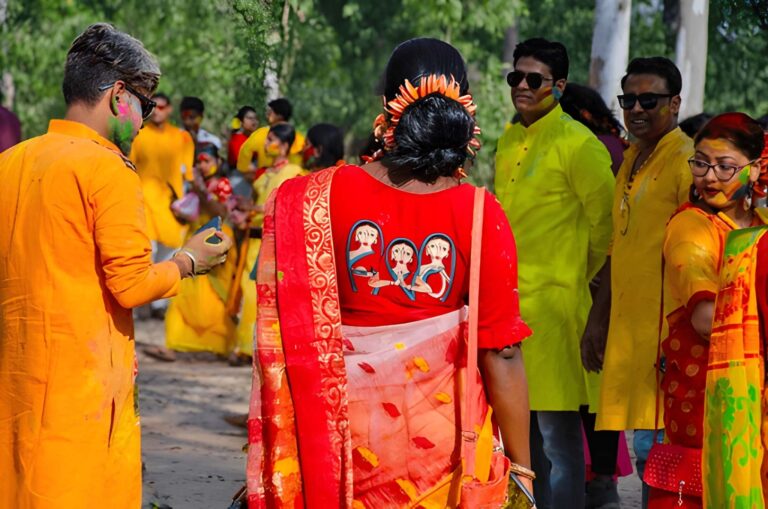
- Durga Puja: Like the rest of West Bengal, Durga Puja is celebrated with great fervor in Howrah. The district is famous for its elaborate pandals, artistic displays, and cultural performances.
- Makar Sankranti: This festival is celebrated by flying kites, offering tilgul, and enjoying a community atmosphere.
- Rath Yatra: The Rath Yatra in Howrah is a significant Hindu festival celebrated with great enthusiasm, especially in the Bengali and Odia communities.
Language & Dialects
The primary language spoken in Howrah is Bengali, with a significant portion of the population also speaking Hindi. English is used for official and business purposes. Bengali culture is prominent, and the district is home to various Bengali festivals, literature, and arts.
Cuisine and Food
- Fish Curry and Rice: A staple dish in Howrah and Bengal, fish curry served with rice is a common meal.
- Shorshe Ilish: Hilsa fish cooked with mustard paste, a quintessential Bengali delicacy.
- Kosha Mangsho: A popular Bengali dish made with mutton, cooked with rich spices, and usually served with rice or parathas.
- Sondesh: A famous Bengali sweet made from cottage cheese and flavored with cardamom.
Education and Medical
Colleges and Institutes in Howrah
- Howrah Mahila Mahavidyalaya: A popular college offering undergraduate courses in arts, science, and commerce.
- Bengal Engineering and Science University (BESU): One of the oldest engineering institutions in India, located in Shibpur, Howrah.
- Shibpur Dinobundhoo Institution: Offers courses in arts, science, and commerce, contributing to the higher education scene in the district.
Hospitals and Medical Services in Howrah
- Howrah District Hospital: The main government hospital offering healthcare services to the local population, with a range of medical treatments available.
- Shibpur Hospital: A local hospital in Shibpur catering to the medical needs of nearby residents.
Key Facts at a Glance
- Area: 1,467 sq. km.
- Population: Approx. 5.4 million (verify with latest data).
- Subdivisions: 3
- Blocks: 12
- Major Tourist Spots: Howrah Bridge, Howrah Junction, Marble Palace, Indian Botanical Garden.
- Famous For: Howrah Bridge, Howrah Junction, engineering, and cultural festivals.